


890fd0.png)
Client Overview
About the Client
With nearly two decades of industry experience, this Karnataka based manufacturing company specializes in producing metal cans, closures, and other packaging components used across various industries.
Operating in a process driven manufacturing environment, the company manages procurement, production planning, inventory movement, subcontracting activities, vendor coordination, sales, and accounting. As operations expanded, maintaining visibility and control through manual methods became increasingly difficult.
To support future growth and improve operational efficiency, the company decided to invest in a manufacturing ERP solution that could bring all departments together on a single platform.
Company Details
This success story features a Karnataka based metal packaging manufacturer in India operating in the manufacturing sector with a strong focus on producing metal packaging components. To address growing operational complexities and improve coordination across departments, the company adopted ERPNext, hosted securely on Frappe Cloud, with implementation and support provided by Girman Technologies, an official ERPNext and Frappe partner. The implementation covered key business functions, including Manufacturing, Stock and Warehouse Management, Procurement, Sales, and Accounting, enabling the organization to bring its operations onto a single integrated platform. Prior to ERPNext, the company relied on a combination of legacy processes and disconnected systems, which limited visibility, increased manual effort, and made it difficult to track information efficiently across the business.
The Growing Challenge of Managing Manufacturing Operations
When Manual Processes Start Creating Bottlenecks
Manufacturing operations are often interconnected. A delay in inventory updates affects production planning. Inaccurate procurement data impacts material availability. Lack of visibility into subcontracting creates uncertainty across the supply chain.
For Company, one of the biggest challenges was maintaining complete visibility across manufacturing and subcontracting operations.
The company worked with multiple vendors and subcontractors, making it difficult to track material movement, production status, work in progress inventory, and finished goods accurately.
As operations expanded, management needed a better way to monitor processes and ensure accountability throughout the manufacturing cycle.
Key Challenges Faced
Complex Subcontracting Workflows
A significant portion of manufacturing activities involved subcontractors. Tracking raw materials sent to vendors, monitoring production progress, and managing finished goods receipts manually required extensive effort.
Without a structured workflow, maintaining complete traceability across subcontracting operations became increasingly difficult.
Limited Production Visibility
Management often had to depend on manual updates and follow ups to understand the status of production activities.
This resulted in delays in reporting and reduced operational visibility.
Inventory Management Challenges
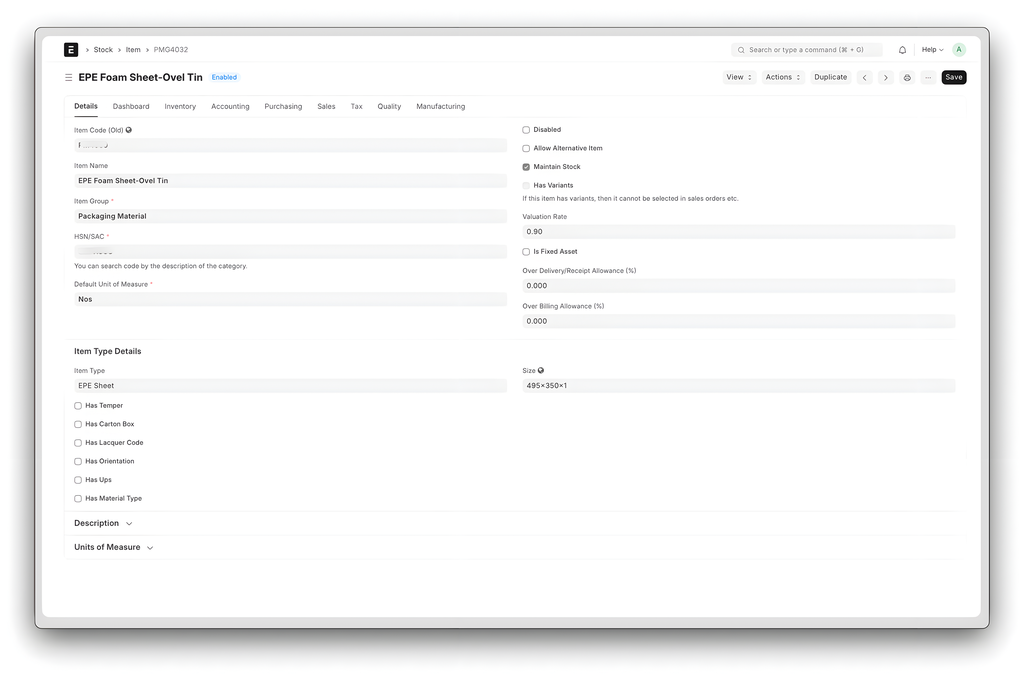
The company needed a centralized Inventory Management System capable of tracking:
- Raw materials
- Semi finished goods
- Finished goods
- Material transfers
- Warehouse stock levels
Manual inventory management increased the possibility of errors and delayed decision making.
Vendor Coordination Issues
Managing multiple vendors involved continuous communication and follow ups.
Tracking material movement, delivery schedules, and vendor specific production activities without an integrated system created inefficiencies.
Disconnected Business Functions
Manufacturing, procurement, inventory, sales, and accounting functions operated separately, limiting real-time visibility across departments.
User Adoption and Process Standardization
Transitioning from traditional methods to a structured ERP Software platform required employee training and continuous support to ensure successful adoption.
Why They Chose Girman Technologies
Looking Beyond Software
They were not merely searching for an ERP software provider. The company required a partner who could understand its manufacturing processes, identify operational challenges, and configure ERPNext according to real business requirements.
Girman Technologies was selected because of its:
Manufacturing Domain Understanding
The project required a deep understanding of manufacturing workflows, particularly subcontracting operations.
Several discussions and on-site visits were conducted to understand the practical challenges faced by the company before designing the solution.
ERPNext Customization Expertise
The flexibility of ERPNext allowed workflows to be configured according to Company’s operational requirements instead of forcing the company to adapt to rigid software processes.
Training & Continuous Support
Successful ERP implementation depends heavily on user adoption.
The Girman Technologies team worked closely with employees to ensure they were comfortable using ERPNext in their day to day operations.
Solution Implemented
After gaining a thorough understanding of the company's manufacturing processes through multiple discussions and an on-site visit, Girman Technologies implemented ERPNext on Frappe Cloud to centralize and streamline the organization's core business operations. The primary objective was to create a single source of truth for manufacturing, inventory, procurement, sales, and accounting while improving traceability across complex subcontracting workflows.
One of the most critical aspects of the project was designing a structured and traceable subcontracting process within ERPNext. Since a significant portion of the manufacturing activities involved external vendors, it was essential to accurately track raw materials sent to subcontractors, monitor work-in-progress items, record finished goods received, and maintain complete visibility throughout the production cycle. The ERPNext implementation was customized to align with the company's existing manufacturing practices while ensuring better control and accountability.
Modules Implemented
Manufacturing Management
The Manufacturing module was configured to manage production planning, Bills of Materials (BOM), Work Orders, material consumption, and production tracking. This provided greater visibility into manufacturing activities and helped standardize production processes.
Stock & Warehouse Management
ERPNext was implemented to provide real-time visibility into inventory across warehouses. The company can now track raw materials, semi-finished goods, finished products, stock transfers, and inventory movements from a centralized system, reducing reliance on manual records.
Procurement Management
The procurement workflow was structured to manage purchase requests, supplier transactions, purchase orders, and material procurement efficiently. This improved coordination between procurement and production teams while ensuring timely availability of materials.
Sales Management
The Sales module helped organize customer orders, delivery processes, and sales transactions, enabling better coordination between customer requirements and production planning.
Accounting & Finance
Accounting processes were integrated with operational activities to ensure accurate financial tracking. Transactions related to purchases, sales, inventory, and manufacturing were automatically reflected in the accounting system, reducing manual effort and improving reporting accuracy.
Key Customizations
To meet the company's unique operational requirements, several workflow customizations were implemented, particularly around subcontracting and material traceability. These customizations enabled the organization to:
- Track materials issued to subcontractors
- Monitor vendor-wise production activities
- Maintain complete traceability of inventory movement
- Record finished goods received from vendors
- Link inventory transactions with accounting entries
- Generate real-time operational and management reports
- Training & User Adoption
A successful ERP implementation goes beyond software deployment. To ensure smooth adoption across departments, Girman Technologies conducted user training sessions and provided continuous support throughout the implementation process. This helped employees become comfortable with ERPNext and enabled them to transition from manual processes to a more structured and efficient way of working.
By implementing ERPNext and tailoring it to the company's manufacturing requirements, Girman Technologies helped create a centralized system that improved operational visibility, enhanced traceability, and simplified day-to-day business management.
Customized Subcontracting Workflow
Building Traceability into Manufacturing Operations
The most critical aspect of the project involved designing a customized subcontracting workflow inside ERPNext.
This required extensive planning because subcontracting directly impacts production timelines, inventory management, vendor accountability, and financial reporting.
The customized workflow enabled Manufacturing Company to:
- Track materials sent to subcontractors
- Monitor work in progress inventory
- Record subcontractor activities
- Track finished goods receipts
- Maintain complete material traceability
- Link inventory and accounting transactions
The result was significantly improved visibility across manufacturing operations.
Key Benefits Achieved
Following ERPNext implementation, manufacturing company experienced improvements across multiple business functions.
Centralized Business Operations
Manufacturing, inventory, procurement, sales, and accounting teams began working on a unified platform.
Improved Inventory Visibility
Real time inventory information reduced dependency on spreadsheets and manual stock registers.
Better Production Monitoring
Management gained improved visibility into manufacturing activities and production status.
Enhanced Vendor Management
Vendor coordination became easier through structured workflows and systematic tracking.
Reduced Manual Effort
Several repetitive tasks were automated, reducing dependency on manual data entry.
Improved Reporting
Business reports became available in real time, helping management make faster decisions.
Better User Accountability
Clearly defined workflows improved process ownership and accountability across departments.
Business Impact
Before ERPNext
- Manual subcontracting tracking
- Limited inventory visibility
- Delayed reporting
- Multiple data sources
- Vendor coordination challenges
- Production tracking difficulties
After ERPNext
- Centralized manufacturing ERP platform
- Complete subcontracting traceability
- Real time inventory management
- Integrated procurement workflows
- Connected accounting and operations
- Faster reporting and decision making
One of the most valuable outcomes was improved operational visibility.
Management could now track inventory, production activities, vendor interactions, procurement status, and financial transactions through a single ERP platform.
Client Testimonial
"With over 18 years of experience in the Metal packaging manufacturing industry in Karnataka, managing complex subcontracting workflows, inventory movement, and vendor coordination manually had become increasingly challenging as our operations expanded. That’s when we chose Girman Technologies, an official ERPNext and Frappe partner, to ease our business operations and help us achieve traceability across business challenges through ERPNext implementation customized according to our manufacturing processes. The training and continuous support provided by the Girman Technologies team made ERP adoption much easier for us. We highly recommend Girman Technologies for ERPNext implementation."
— CEO of Metal Packaging Manufacturing company, Karnataka
Future Growth Plans
With ERPNext serving as the operational backbone of the organization, company is now better prepared for future expansion.
The company plans to leverage ERPNext further for:
- Manufacturing growth
- Inventory optimization
- Advanced reporting
- Process standardization
- Improved operational visibility
- Business scalability
Having a centralized ERP system ensures the company can grow without increasing operational complexity.
Conclusion
For manufacturing companies, growth often brings operational complexity. Inventory movement, subcontracting activities, vendor coordination, procurement management, and financial tracking become increasingly difficult when managed manually.
By implementing ERPNext with Girman Technologies, Metal ackaging Manufacturing Company established a centralized manufacturing ERP system that brought greater visibility, accountability, and control across business operations.
Today, the company manages manufacturing, inventory, procurement, sales, and accounting through a single platform, enabling better decision making, stronger process traceability, and a scalable foundation for future growth.
Ready to Simplify Your Manufacturing Operations with ERPNext?
Whether you're managing complex production workflows, subcontracting processes, inventory movement, procurement, or accounting, ERPNext can help bring everything together on a single platform.
Looking to improve visibility, traceability, and operational efficiency in your manufacturing business? Schedule a free consultation with our ERP experts and explore how ERPNext can be customized for your unique business processes.
👉 Book a Free ERPNext Demo
Girman Technologies is an official ERPNext and Frappe implementation partner helping manufacturers, retailers, distributors, and growing businesses automate operations and scale with confidence.


